
The Whole Body Assessment
One blood draw. 50+ lab markers across 8 body systems, a full M.D. visit, a plain-language report and a plan written for you. $465, all in. No add-ons, no surprise bills.
Simple process, clear explanations.
A real visit with the doctor
You are busy, and you want to be heard. We listen, prioritize your concerns, and decide together what will be tested.
A quick blood draw
Labs are drawn in the clinic and processed within about a week.
Results, explained
We review each marker, explain what it means, and build a plan you can act on. Prefer to go over it by telehealth? That works too.
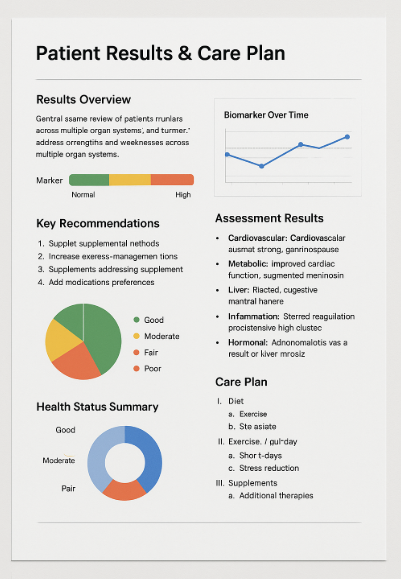
Your personalized health report.
Your results arrive securely in your patient portal, with everything you need to know about where your health stands. It is more than numbers: it is a clear, actionable plan.
- Detailed results with optimized reference ranges.
- Clear explanations of any abnormalities found.
- Potential interventions and lifestyle modifications.
- Dietary, supplement, and pharmacologic therapies (as needed*).
*Prescriptions and supplements only when they are the right tool for you.
Everything in your Whole Body Assessment.
52 markers across 13 groups. These labs give you a real baseline. We explain every out-of-range result and what to do next.
Longevity & Aging
1 markerYour “wear and tear” age, not just birthday count.
- Biological AgeUses signals like inflammation, blood sugar control, kidney function, and blood health to estimate how fast (or slow) you’re aging.
Red Blood Cell Health
6 markersDo you have enough healthy red cells circulating?
- RBC (Red Blood Cells)Counts the cells that carry oxygen. Low can mean anemia; high can mean thicker blood or dehydration.
- HemoglobinThe oxygen-carrying protein in red cells. Core screen for anemia and fatigue causes.
- Hematocrit% of blood made of red cells. Moves with hemoglobin and hydration.
- MCV / MCH / MCHCSize and hemoglobin content of each red cell. Helps sort iron vs B12 / folate problems.
- RDWVariation in red cell size. A wide spread can mean early or mixed anemia.
- PlateletsCells that help you clot. Too low = bleed risk; too high can track with inflammation.
Iron & Oxygen Delivery
3 markersDo you have enough iron on board to move oxygen efficiently?
- Total IronHow much iron is circulating in your blood right now.
- Iron Binding Capacity (TIBC)How much “open seat” your blood still has to carry more iron.
- FerritinStored iron. Low ferritin can mean low reserve even if other labs look “okay.”
Immune Health
6 markersInfection signals, allergy patterns, and immune reserve.
- WBC (White Blood Cells)Defense cells. High can mean infection or stress on the body; very low can mean low reserve.
- NeutrophilsOften rise with bacterial stress or sudden inflammation.
- LymphocytesImportant for viral defense and long-term immune memory.
- Monocytes“Clean-up crew.” Can climb with longer-running or chronic inflammation.
- EosinophilsCan point toward allergy-type inflammation or certain sensitivities.
- BasophilsAllergy / immune signaling cells, usually present in very small numbers.
Inflammation Load
2 markersQuiet, ongoing inflammation that can stress the heart and vessels.
- High-Sensitivity CRP (hs-CRP)Low-grade inflammation signal. Higher levels can line up with higher vessel / heart risk.
- ESR (Sed Rate)How fast red cells settle. A broad “are you inflamed?” screen.
Kidney Function
3 markersHow well you’re clearing waste and filtering blood.
- BUNProtein waste in the blood. Can rise with dehydration or kidney strain.
- CreatinineByproduct of muscle use. Along with eGFR, screens kidney filtration strength.
- eGFREstimated kidney filter rate. Lower numbers mean reduced kidney performance.
Electrolytes & Acid–Base
6 markersHydration, heart rhythm support, and pH balance.
- Sodium (Na)Core salt for fluid balance, nerves, and blood pressure support.
- Potassium (K)Critical for heart rhythm and muscle contraction.
- Chloride (Cl)Works with sodium to keep fluids and acid–base steady.
- CO₂ / BicarbonatepH / acid–base status. Low can mean the body is running more acidic than normal.
- Anion GapMath check on acid–base balance in the blood.
- CalciumBone strength, muscle firing, and nerve signaling.
Liver Health
4 markersLiver cell stress and bile movement.
- ASTEnzyme released when liver (and sometimes muscle) cells are irritated.
- ALTMore liver-specific enzyme. High can mean liver irritation or injury.
- Alkaline PhosphataseCan reflect bile duct flow or bone turnover.
- Total BilirubinHow you clear red-cell breakdown through bile. Can flag bile flow problems.
Proteins & Nutrition Status
4 markersAre you making and carrying enough of the core proteins your body needs?
- Total ProteinOverall circulating protein level (nutrition + liver production).
- AlbuminMain blood protein. Tracks nutrition, hydration, and liver synthesis.
- GlobulinTransport and immune-related proteins in your blood.
- A/G RatioBalance of albumin vs globulin; shifts can hint at inflammation or liver issues.
Cardiometabolic Lipids
5 markersCholesterol transport and circulating fats tied to vessel health.
- Total CholesterolAll cholesterol together. A starting number, not the whole story.
- LDL-CCholesterol carried to tissues. We want this in a safe range for artery health.
- HDL-CCholesterol carried away for recycling. Often called the “protective” fraction.
- TriglyceridesCirculating fats. Often linked with diet, weight, and blood sugar control.
- Non-HDL CholesterolTotal minus HDL. A useful single number for total cholesterol load.
Thyroid & Metabolism
4 markersSignals that drive energy, temperature, and daily metabolic speed.
- TSHBrain signal telling the thyroid to work harder or relax. First-line screen for slow or fast thyroid.
- T4 TotalTotal amount of main thyroid hormone in circulation.
- T3 UptakeIndirect look at how binding proteins handle thyroid hormone.
- Free T4 IndexEstimated “free” thyroid hormone available for your cells to actually use.
Hormones
6 markersBaseline hormone signals that guide energy, body composition, and long-term metabolic health.
- Total TestosteroneOverall testosterone level in the bloodstream.
- Free TestosteroneTestosterone not tightly bound to proteins — the portion most available for tissues like muscle.
- Bioavailable TestosteroneFree + loosely bound testosterone. A practical look at usable signal.
- Sex Hormone Binding Globulin (SHBG)Carrier protein that “holds” testosterone and other hormones. Higher SHBG can mean less freely available hormone.
- EstradiolKey estrogen for bone, brain, and metabolic stability.
- AMH (Anti-Müllerian Hormone)Reflects ovarian reserve and hormone production capacity over time.
Vitamins & Reserves
2 markersFoundation nutrients for nerves, bones, recovery, and energy.
- Vitamin B12Needed for healthy nerves and red blood cells. Low levels can show up as fatigue, tingling, or brain fog.
- Vitamin DSupports bone strength, muscle function, and immune balance. Low vitamin D is extremely common.
Go beyond “your labs look fine.”
Get a real baseline: every marker explained, every question answered, one plan to move on.
Plain-language review
We explain every abnormal result and what to do next. No jargon.
Same-clinic continuity
Questions later? You talk to the same team that knows your history.
Critical calls
If something needs urgent attention, we call you. No waiting on portals.
Ready for a real baseline?
Book the Whole Body Assessment online, or call and we will set it up with you.